
Visual Game No. 04
A Brush with History
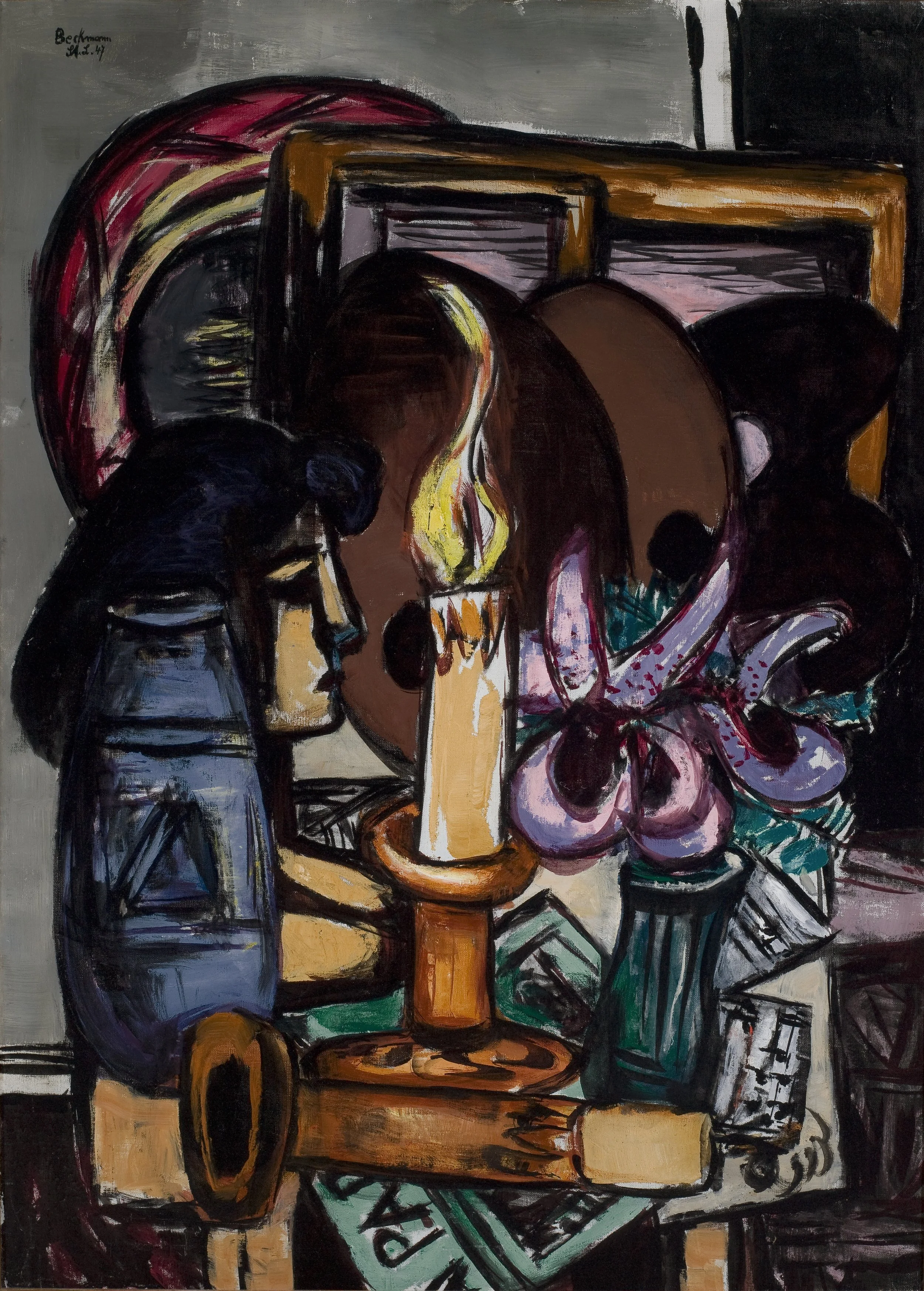
Still Life with Two Large Candles
Max Beckmann, 1947
Oil on canvas
Max Beckmann has long been one of my favorite painters. A German Expressionist, he was interested in something beyond photographic reality: the raw, sometimes uncomfortable experience of being alive.
His paintings are full of tension. Shapes feel pushed and compressed, crowded together until there’s hardly room to breathe. Even his still lifes, a subject traditionally associated with quiet and stillness, seem restless.
Take a good look at this painting. The title mentions two candles, but one is harder to find. It’s fallen over, and its flame has gone out. Can you find it?
Now look at how Beckmann builds the picture. Notice the strong outlines, the interlocking shapes, and the way objects press against one another. Where does one shape end and another begin? How much empty space can you find?
Start with the largest shapes. Look for the big areas of color and the shapes that divide the composition. Lay those down first, then build with medium and smaller shapes, letting them overlap, interrupt, and crowd one another.
Let your palette lead. Forget about matching Beckmann’s colors. Use the painted papers you’ve been given to reconstruct his composition in your own way.
What happens to the painting when its shapes remain, but its colors change?
A few tips
Cover the white paper completely to create a world of color and shape.
Begin with the largest shapes before adding details.
Move your pieces around before gluing them down.
Remember, your colors don't have to match the original.
Learn More about the painting:
Max Beckmann painted this still life in St. Louis in 1947, shortly after arriving in the United States. At its center are two candles: one upright and burning, the other fallen and extinguished. Traditionally symbols of life's fleeting nature, the candles appear alongside a sculpted female head and an arrangement of orchids.
Beckmann brings these objects together in a tightly constructed composition of overlapping and interlocking shapes. The result is a familiar still life transformed into something more complex, where ordinary objects carry both visual and symbolic weight.